
5 Costly Mistakes When Buying Stacking Chairs in NZ (And How to Avoid Them)
Buying stacking chairs seems straightforward until the wrong ones start failing under real commercial use. Schools, churches, function
centres and event venues across New Zealand regularly end up replacing chairs years earlier than expected because of a handful of common
purchasing mistakes.
These errors cost more than just the initial price. They create extra labour, storage problems, safety issues and repeated replacement spend. Here’s a clear look at the five most expensive mistakes we see, and how to avoid them when choosing stackable chairs for NZ conditions.
1. Choosing Residential-Grade Chairs for Commercial Use
This is the most common and most expensive mistake. Many buyers look at the price and appearance of lighter, domestic-style chairs and assume they’ll handle school halls, exam setups or regular event hire. They usually don’t.
Residential chairs are designed for occasional home use. Commercial stacking chairs need stronger frames, higher weight ratings, tougher seat materials and better resistance to constant stacking, moving and cleaning. When light chairs are used daily in high-traffic environments, frames bend, feet wear out, and seats crack far sooner.
How to avoid it: Look for chairs clearly specified for commercial or education use. Check the weight capacity (ideally 140–160 kg), frame construction, and warranty length. Models built for NZ venues and schools, such as the Game Skid Black Stacking Chair and the Strong Squad Senior Chair, are designed to handle repeated daily use without early failure.
2. Ignoring How High the Chairs Actually Stack
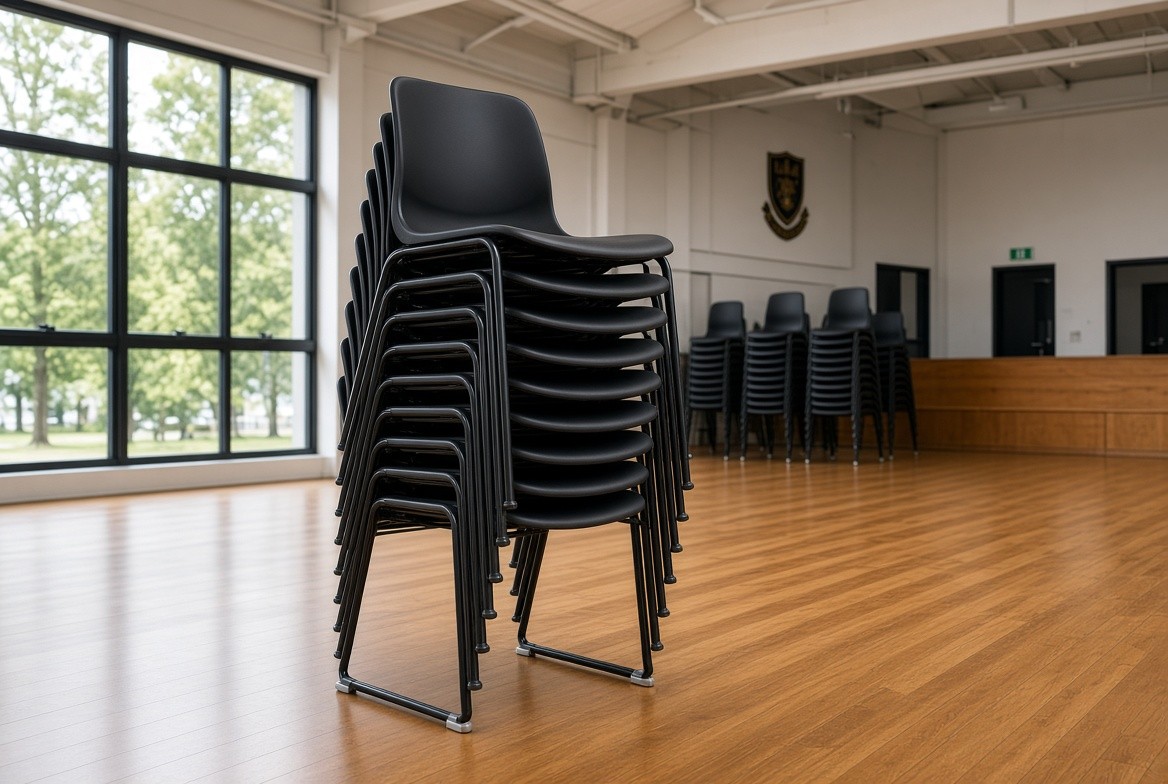
Not all stacking chairs are equal when it comes to storage. Some stack only 4–6 high. Others are designed to stack 8–10 high on the floor and significantly higher on a dedicated trolley. Buyers who don’t check stack height often discover too late that the chairs take up far more floor space than expected.
In school halls, church storage rooms and multi-purpose venues, efficient stacking directly affects how much usable space you keep. Poor stack height means chairs spill into walkways or force you to rent extra storage.
How to avoid it: Ask for the maximum stack height both on the floor and on a trolley. Commercial options such as the Slim Chair Black and the Zip Chair offer good stacking density, making it much easier to clear and store chairs efficiently.
3. Skipping the Matching Chair Trolley
Buying chairs without a proper trolley is a false economy. Staff end up carrying chairs one or two at a time, which is slow, hard on backs, and increases the chance of damage to both the chairs and the building.
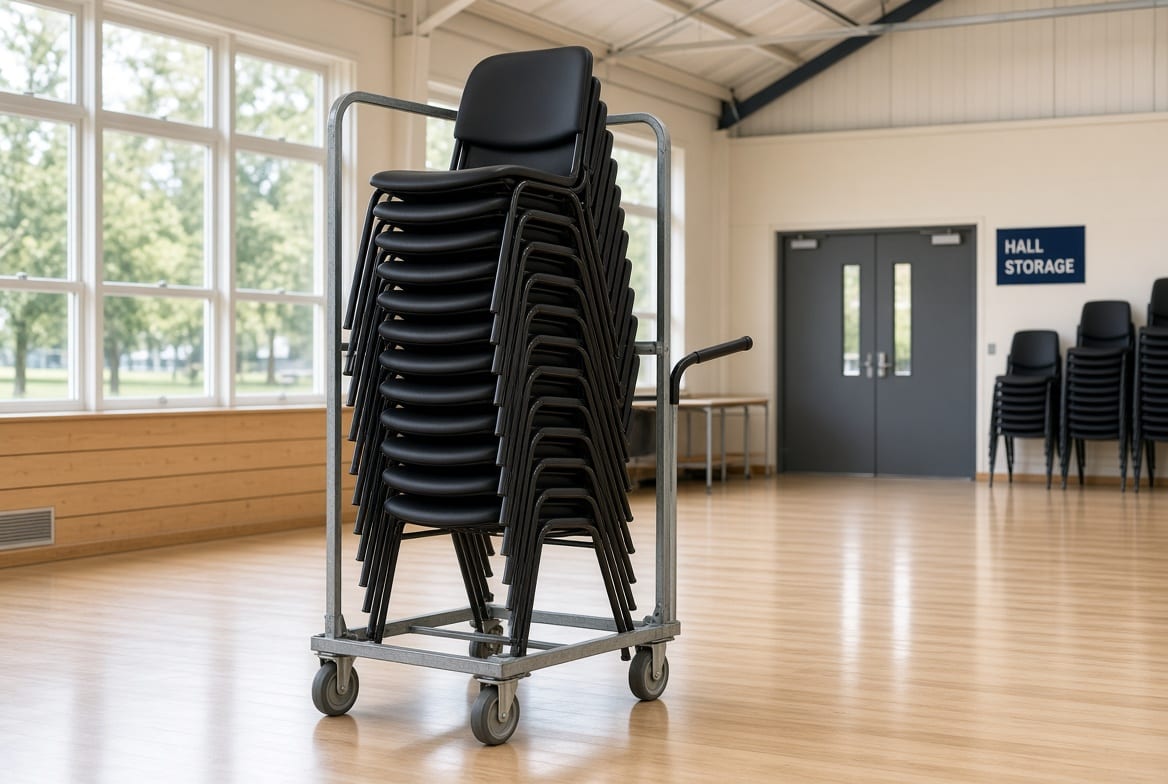
A good chair trolley lets one person move a full stack safely. It also protects the chairs during transport and storage. Many NZ venues that skip the trolley later pay for damaged frames, scuffed walls, and higher labour costs.
How to avoid it: Always budget for a matching trolley when you order stacking chairs. Look for models designed specifically for the chair range you choose. For example, the Game Skid Chair Trolley works with the Game Skid range and allows chairs to be stacked and moved far more efficiently. The right trolley quickly pays for itself in reduced labour and fewer broken chairs.
4. Overlooking Linking or Ganging Features
In rows of seating for assemblies, conferences, services or exams, chairs that don’t link properly become a safety and layout problem. Gaps appear, rows wander out of line, and chairs can tip more easily if someone leans or stands on them.
Linking (also called ganging) keeps chairs connected in neat, stable rows. It is especially important in education and public venues where health and safety standards matter.
How to avoid it: Choose stacking chairs that offer linking capability as standard. Models such as the Zip Chair include linking feet that allow chairs to connect without extra hardware. This small feature makes a big difference to both safety and the professional look of your seating layout.
5. Buying the Wrong Material for the Environment
Not every stacking chair suits every location. Plastic chairs that work perfectly indoors can fade or become brittle outdoors. Upholstered chairs that look great in a function centre can be harder to clean in a school or high-spill environment. Lightweight chairs may be easy to move but lack the durability needed for heavy daily use.
How to avoid it: Match the material to the real conditions:
- High-traffic education or multi-purpose venues → tough polypropylene options
- Formal or longer seating events → upholstered models such as the Klub Chair
- Spaces that need a balance of strength, linking and easy stacking → commercial stackable chairs designed for NZ venues
Also consider how often the chairs will be cleaned and whether they need to withstand frequent moving and stacking.
What Good Commercial Stacking Chairs Should Deliver
When you avoid the five mistakes above, the right chairs deliver clear long-term value:
- Strong frames and commercial weight ratings (140–160 kg)
- Efficient stack height that saves valuable storage space
- Matching trolleys that reduce labour and damage
- Linking options for safer, neater rows
- Materials and warranties suited to NZ schools, halls, churches and venues
At Capital Commercial Furniture we supply a wide range of commercial stackable chairs as part of our wider hospitality furniture range, along with matching trolleys. All ship NZ-wide and come with the warranties commercial buyers need.
Final Thoughts: Buy Once, Use for Years
Stacking chairs are a long-term investment for any NZ venue or school. The cheapest option on the day often becomes the most expensive over five or ten years once you factor in replacements, labour, storage problems and safety issues.
Take the time to check commercial ratings, stack height, trolley options, linking ability and material suitability. Doing this upfront avoids the costly regrets that many venues only discover after the chairs are already in daily use.
Ready to choose stackable chairs that will last? Explore our full range of commercial stackable chairs and matching trolleys designed for New Zealand schools, events and venues.



 Follow us on: facebook
 Follow us on: X
 Follow us on: LinkedIn
 Follow us on: Youtube
 Follow us on: Instagram