
Round vs Rectangular Folding Tables for NZ Events and Banquets
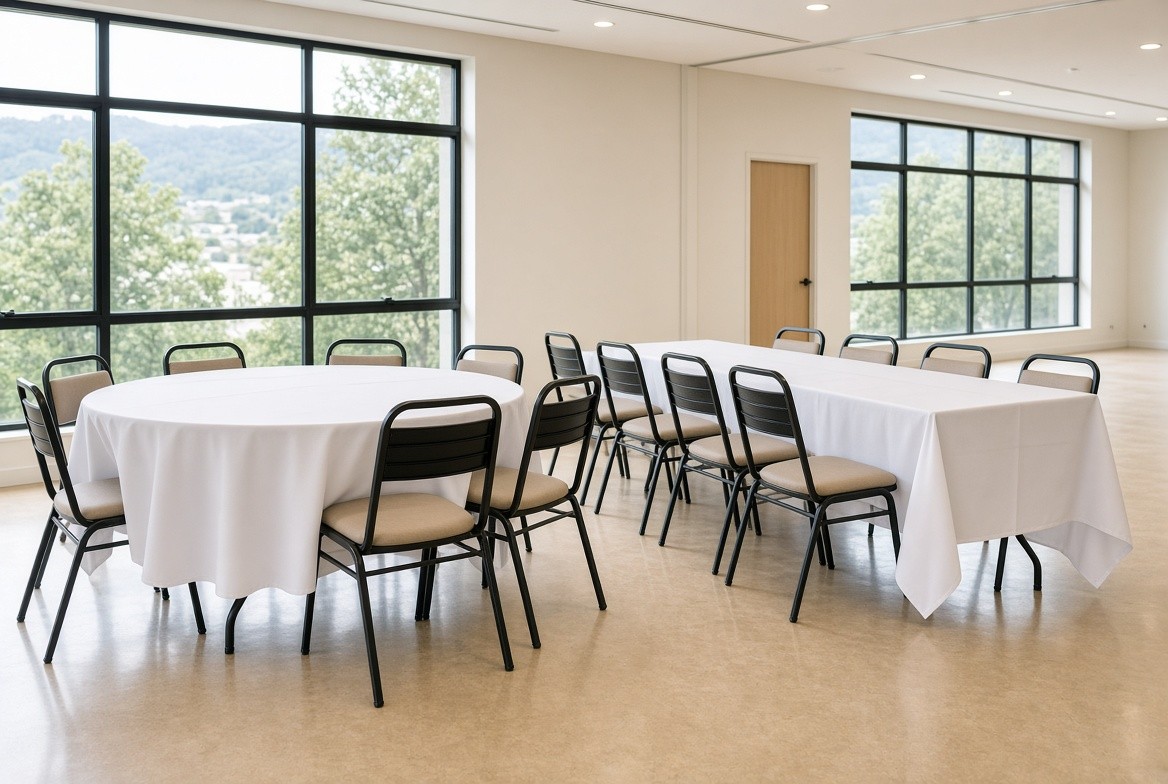
Choosing the right shape is one of the first decisions that affects how an event actually feels and how many people you can comfortably seat. Round vs rectangular folding tables both work well in New Zealand venues, but they suit different jobs. A function centre might use rounds for a wedding dinner and switch to rectangular tables the next day for a conference. Getting the shape right from the start saves rearranging mid-setup and avoids guests feeling cramped or isolated.
This guide focuses on the shape decision itself — when rounds work better, when rectangular tables make more sense, and how the two can be mixed. For exact spacing numbers and aisle widths, use our Folding Tables Event Spacing Guide rather than guessing from memory.
When Round Folding Tables Work Better
Round tables encourage conversation. Everyone faces inward, so no one is stuck at the “end” of the table looking at someone’s back. This makes them the usual choice for:
- Wedding receptions and banquets where people are expected to talk
- Smaller group dinners or networking events
- Corner or awkward spaces that rectangular tables leave unused
A typical 1500 mm or 1800 mm round seats 8–10 people depending on the chairs and how much elbow room you allow. Because the edge-to-edge measurement is usually tighter than a rectangular layout, rounds can feel more intimate. They also look less “institutional” once tablecloths go on, which matters for paid functions.
The trade-off is capacity and service. Rounds generally seat fewer people per square metre than well-planned rectangular rows, and wait staff have to move around the full circle. For larger numbers, you need more tables (and more storage).
When Rectangular Folding Tables Make More Sense
Rectangular tables are the practical workhorses. They line up easily, create clear aisles, and pack more people into the same floor area
when you need to maximise numbers. They suit:
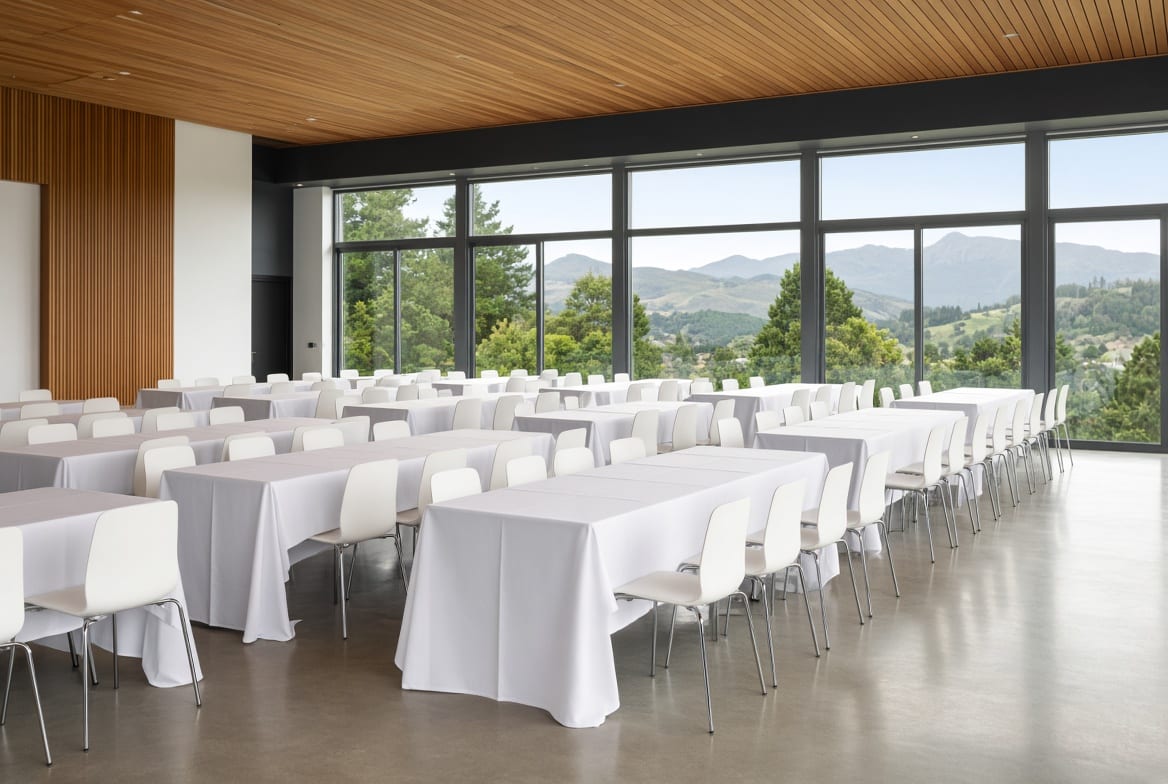
- Conferences, training days, and classroom-style setups
- Long banquet tables or top tables at events
- Buffet lines, registration desks, or display areas
- Venues that regularly reconfigure between dining and presentation modes
An 1800 mm × 750 mm rectangular table commonly seats 6–8 people. Place them in rows or a U-shape and you get efficient use of the room plus straightforward access for catering or speakers. They also stack and trolley more predictably for many venues.
The downside is social. People at the ends can feel slightly cut off, and long rows can look a bit formal or institutional if every table is the same. That’s why many venues mix the two shapes.
Mixing Round and Rectangular Tables
You don’t have to choose only one. A common approach for NZ function centres and clubs is to run round tables in the main dining area and rectangular tables along the walls, at the top table, or for the buffet. This gives guests the conversational feel of rounds while still using the space efficiently and creating clear service paths.
When you mix shapes, the spacing rules change slightly. The existing Folding Tables Event Spacing Guide covers the recommended edge-to-edge distances for both rectangular and round layouts (including service aisles and accessibility). Follow those numbers rather than treating the two shapes the same — rounds usually need a bit more breathing room around the full circumference.
Practical Factors Beyond Shape
Shape is only part of the decision. For regular commercial or event use also consider:
- Top material — plastic or polypropylene for easy cleaning and outdoor-adjacent use; wooden or plywood for a more finished indoor look.
- Weight and folding mechanism — lighter tables are easier for smaller teams; heavier commercial frames stay more stable under load.
- Storage — rounds and rectangles often need different trolleys. Check that your existing storage and trolley setup will handle the mix you want.
- Chair compatibility — stacking chairs or banquet chairs should sit comfortably under the edge without the legs fouling. Test one table and chair combination before ordering a full set.
All of these options are available in the hospitality folding tables range, so you can match the shape to the job without compromising on commercial durability.
Quick Decision Guide
- Choose round when conversation and a less formal feel matter more than maximum numbers.
- Choose rectangular when you need higher capacity, clear aisles, or the tables will also be used for meetings, training, or buffets.
- Mix both when the room has to do multiple jobs or you want visual variety without wasting space.
- Always check the spacing guide before finalising the layout so the numbers you order actually fit comfortably.
Ready to Choose the Right Shape?
Most New Zealand venues end up with a combination rather than a single shape. Start with how the space will actually be used (dining, meetings, or both), then match the table shape to that. Our hospitality folding tables category includes both round and rectangular options in commercial grades that hold up to regular event use and nationwide delivery.
Browse the hospitality folding tables range, or use the spacing guide to confirm how many of each shape your room can comfortably take before you order.



 Follow us on: facebook
 Follow us on: X
 Follow us on: LinkedIn
 Follow us on: Youtube
 Follow us on: Instagram