
How to Choose Tables for Events in New Zealand
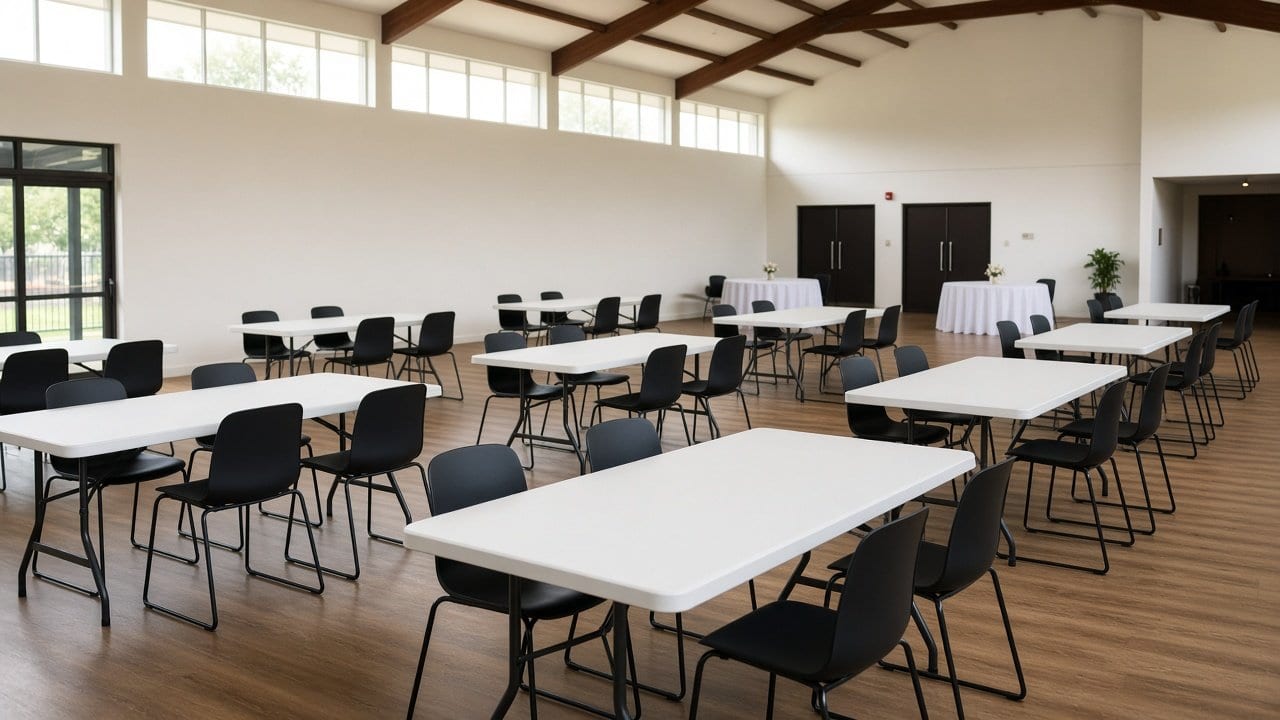
Whether you're running a wedding, conference, school formal, marae gathering or community function, your tables affect how comfortable guests are, how long setup takes and how well the furniture holds up over a busy season. This guide helps you choose tables that suit the way your events actually run.
For exact aisle widths and gaps between tables, see our event spacing guide. When you're ready to compare options, browse our commercial event table range.
Match the table to the event type
Start with how the room will be used:
- Dining and catering: guests sit for longer, so stability and an easy-clean top matter more than having the lightest table.
- Conferences and training: tables are usually set in rows or U-shapes, which are easier to line up with consistent rectangular sizes.
- Registration, displays and buffets: fewer people sit at these tables, but the tops need to handle signage, catering equipment or merchandise.
- Mixed community venues: one set of tables may cover exams, markets and functions, so a durable frame and simple pack-down are worth prioritising.
Note down your usual guest numbers, any limits on the room, and who will be moving the furniture. A short brief like that stops you buying out of habit.
Plan your quantity
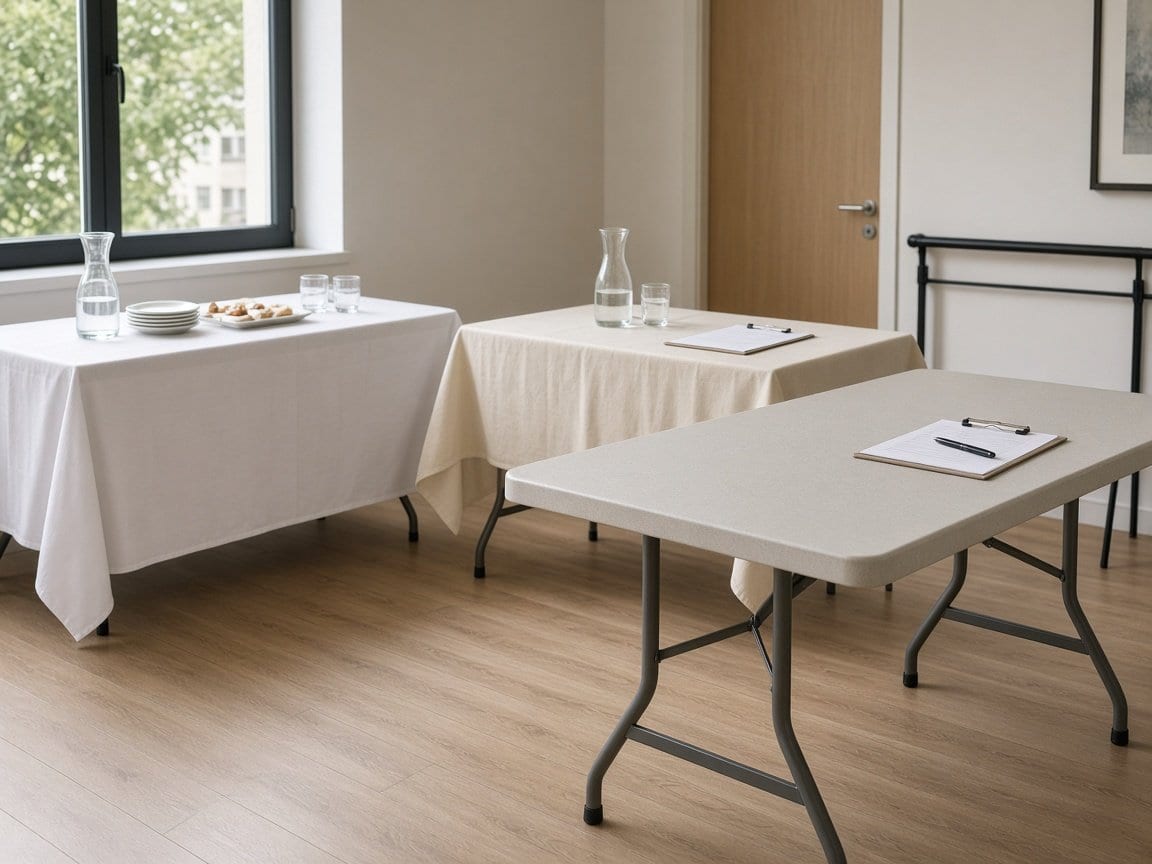
Table size affects how many people you can seat and how many tables you'll need. To estimate quantity:
- Work out how many seated guests your busiest regular layout needs.
- Decide how many people will sit at each table in that layout. Dining and classroom-style seating are different.
- Add a few extra tables for registration, gifts, catering or displays.
Once you know your table shape and aisle requirements, use the spacing guide to check the floor plan.
Rectangular, round, or both
Rectangular tables suit exams, training rows and long banquet layouts. Round tables encourage conversation at dinners and workshops. Many New Zealand venues use a mix of both.
Choose the shape before you settle on numbers, because the same guest count can need a different number of tables. For the full comparison, read round vs rectangular tables for events.
Surface and frame
Event tables are moved, stacked and cleaned often. When comparing models, look at:
- Tabletop surface: easy-clean finishes for catering, and tougher surfaces where equipment is moved on and off.
- Edge protection: helpful when tables are knocked in trolleys or storerooms.
- Frame and locks: legs should lock securely and the table should feel stable in use.
- Feet: non-marking feet matter in venues with polished or delicate floors.
For a detailed comparison of tabletop materials, see plastic vs wooden vs plywood tables.
Weight, handling and heavy-duty use
Lighter tables are quicker for small teams to move, while heavier commercial tables generally suit frequent use and regular dining or display loads.
A heavy-duty model is worth considering when tables are used most weekends, carry regular dining or display loads, or need a solid, stable surface for plated service. A lighter model may suit you better when staff numbers are small, setup time is short or tables are mainly needed for overflow.
Check each model's weight and load guidance, as these vary by product. For advice on choosing a lighter table, read our lightweight table guide.
Storage and transport
Tables are only practical if they fit your storage space and handling process.
- Check folded dimensions and how tables should be stacked or stored.
- Plan a trolley route if you'll move several tables at once.
- Clean and dry tables before storing them so moisture and food residue aren't trapped between them.
If moving tables is your biggest challenge, plan storage and trolleys at the same time as you choose the tables.
A simple checklist before you buy
You should be able to answer these questions:
- What type of event will you run most often?
- Roughly how many guests will be seated, and which table shape suits the room?
- Who will move the tables, and how far?
- How often will they be used?
- Where will they be stored between events?
Next steps
The right event table is the one that suits your event types, room layout, handling requirements and storage space. Use the specialist guides for layout and materials, then compare models against how your venue actually operates.
Explore our event and hospitality tables to find options for your venue.



 Follow us on: facebook
 Follow us on: X
 Follow us on: LinkedIn
 Follow us on: Youtube
 Follow us on: Instagram