
Stacking Chairs vs Folding Chairs NZ: Which Is Better for Your Venue?
When you’re fitting out a school hall, function centre, church, or multi-purpose venue in New Zealand, one of the first decisions you’ll face is stacking chairs versus folding chairs. Both options promise space-saving seating, but they solve the problem in different ways — and the wrong choice can cost you time, money, and durability in the long run.
Many Kiwi venue managers, school caretakers, and event organisers ask the same question: which style actually works better for regular commercial use? This guide breaks down the real differences so you can decide with confidence.
Quick Overview: How the Two Styles Differ
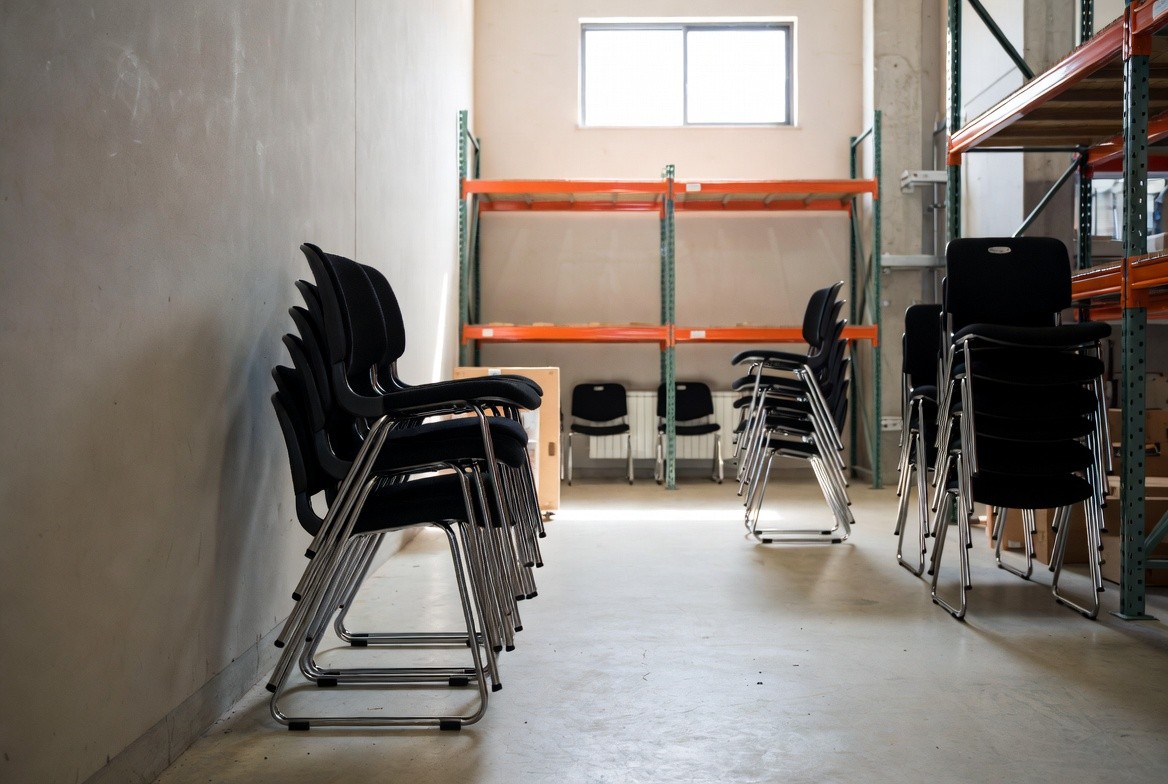
Stacking chairs (also called stacker chairs) are designed to nest on top of each other when not in use. Most commercial models stack 8–10 high, creating a compact vertical column that takes up very little floor space.
Folding chairs collapse flat, usually by folding the legs under the seat. Once folded, they can be stacked or stored upright against a wall, but the storage profile is generally longer and less dense than a true stacking chair.
Both are portable and far more flexible than fixed seating. The key differences show up in daily handling, storage efficiency, long-term durability, and how they perform in high-traffic NZ environments.
1. Storage Efficiency and Space Saving
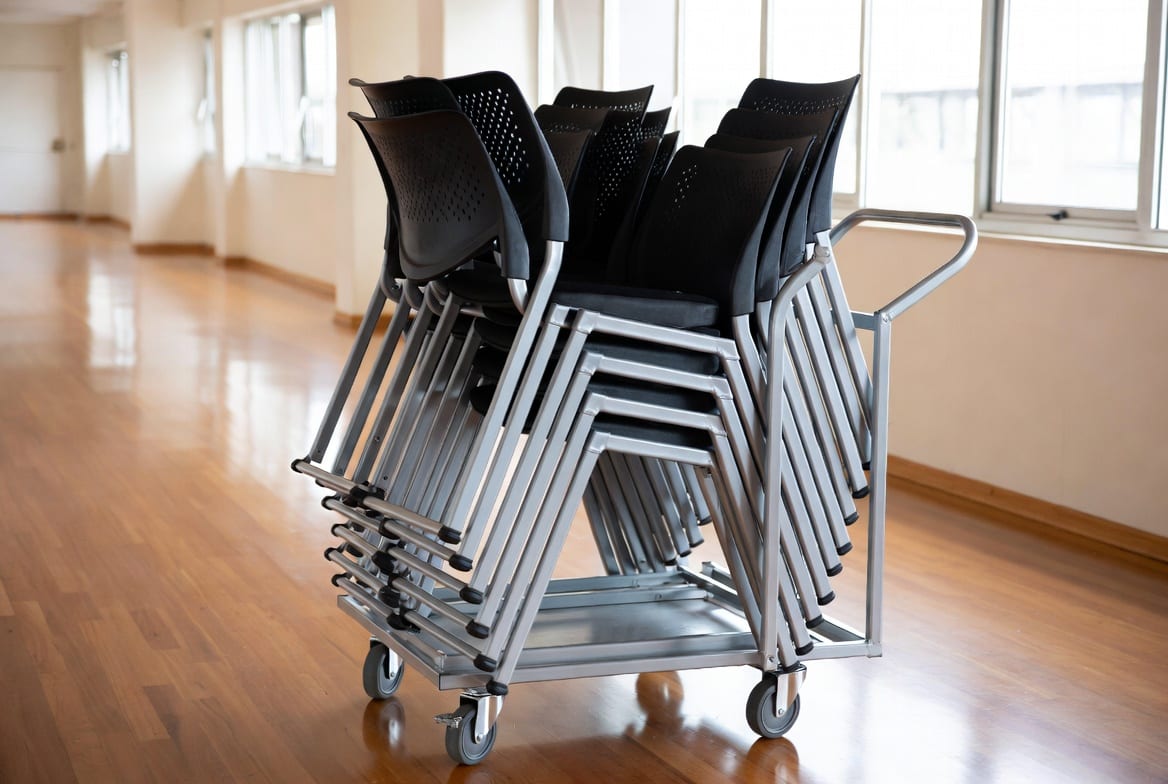
Stacking chairs almost always win on pure space efficiency. A tall stack of 8–10 chairs occupies a surprisingly small footprint and can often be wheeled away on a dedicated trolley. This is ideal for schools that need to clear a hall quickly for exams or assemblies, or for venues that switch between different event layouts several times a week.
Folding chairs fold flat and store well, but they usually take up more linear wall space or shelf space. In smaller storerooms, the difference becomes noticeable once you start dealing with 50+ chairs.
If storage space is tight and you need to pack as many chairs as possible into a cupboard or corner, stacking chairs NZ options generally deliver better results.
2. Durability and Longevity
Commercial stacking chairs are typically built with continuous frames and fewer moving parts. The lack of hinges and folding mechanisms means fewer points of failure over time. Models with powder-coated steel frames, reinforced polypropylene seats, or quality upholstery hold up well under daily student use or regular event traffic.
Folding chairs rely on hinges and locking mechanisms. These can loosen, bend, or fail after repeated folding and unfolding — especially in high-use environments. While good commercial folding chairs exist, the mechanical nature of the design generally means a shorter service life under heavy commercial demand.
For schools, churches, and venues that set up and pack down regularly, stacking chairs tend to offer better long-term value.
3. Comfort and Appearance
This is where the choice becomes more situation-specific.
Many stacking chairs (especially upholstered or contoured models) provide better everyday comfort and a more polished look. Banquet-style stackers and conference chairs often feel more substantial and professional for longer sittings — think seminars, services, or formal dinners.
Folding chairs can be perfectly comfortable for shorter periods, but the typical design is thinner and more utilitarian. They’re excellent for temporary outdoor events or overflow seating, yet they rarely match the presence of a good stacking chair in a formal indoor setting.
4. Setup Speed and Handling
Both styles are fast to deploy, but the workflow differs.
Stacking chairs are quick to unstack and place in rows, especially when used with linking features that keep lines neat and safe. Moving large numbers is easiest with a purpose-built trolley.
Folding chairs unfold one by one. For small numbers this is fine, but for larger setups it can be slower. Once folded they are easy to carry individually, which can be an advantage if you’re only moving a few chairs at a time. You can see practical examples of how foldable chairs are used across New Zealand venues in our earlier guide.
5. Best Uses in New Zealand Settings
Choose stacking chairs when you need:
- Regular setup and pack-down in halls or multi-purpose rooms
- Neat, professional rows for conferences, services, or exams
- Maximum storage density
- Longer-term durability under daily commercial use
Choose folding chairs when you need:
- Occasional overflow seating
- Highly portable individual chairs for outdoor or temporary events
- Simple, lightweight options for infrequent use
- Storage against a wall rather than in a vertical stack
Many venues actually use both — stacking chairs as the core seating and folding chairs as flexible extras.
Making the Right Choice for Your Budget and Space
If you’re buying for regular commercial or educational use in New Zealand, stacking chairs are usually the stronger long-term investment. They store more efficiently, generally last longer, and present better in most indoor settings.
Folding chairs still have a clear place, particularly for outdoor events, temporary needs, or situations where individual portability matters more than dense storage.
At Capital Commercial Furniture we stock a wide range of commercial-grade stacking chairs NZ venues rely on — from lightweight plastic models to upholstered conference and banquet styles — along with practical folding options. All come with solid warranties and nationwide delivery.
Ready to compare options side by side? Explore our full range of stackable chairs and see which style best fits your space and usage patterns. You can also browse our complete hospitality furniture collection for more seating solutions.



 Follow us on: facebook
 Follow us on: X
 Follow us on: LinkedIn
 Follow us on: Youtube
 Follow us on: Instagram